Sabtu, 07 September 2013

North Sumatera, Indonesia

Home to a diverse array of cultures and a fascinating kaleidescope of Indonesian life, the region of North Sumatra has many wonders to explore. North Sumatra’s specacular natural beauty spreads from the magnificent Lake Toba, the biggest lake in Southeast Asia, to the jungle of Bukit Lawang which organgutans make their home. The natural and cultural wonders here make this is a region to come and have a true adventure.

The landscape here has been shaped by thousands of years of volcanic activity. From the incredible Lake Toba which was formed around 75,000 years ago in one of the most fierce volcanic eruptions ever known to the still smouldering Mt Sibayak, volcanoes dominate the landscape everywhere. 

North Sumatra is home to rare and exotic wildlife. Discover exceptional and unique species like the orangutans, the white-handed gibbon, and 17 types of bird. For nature lovers, the extraordinary ecosystems which exist here are well worth a visit.

The largest city in this region, Medan, is a thriving metropolis, and one of the biggest cities in Indonesia. The population of the city is diverse, representing virtually every ethnicity in Indonesia. As one of the most important economic hubs in the country, Medan is also a place to do business with a number of oil and plantation export companies operating here and in the surrounding region.

Whether you’re after a jungle adventure, a relaxing holiday in pristine natural surrounds or an authentic experience of native Batak culture, this is a region which has it all.

LOCAL INTEREST

          1. Tangkahan

Tangkahan is sometimes mentioned as the HIDDEN PARADISE IN SUMATRA. It is definitely hidden and for many a paradise. It is the perfect place to get off the beaten track, but still have access to nice food and comfortable bungalows. Tangkahan is an interesting place in many ways. Interesting for what it has to offer and an interesting background. The elephants, the jungle, and the clean rivers are obvious attractions. What makes Tangkahan different is that it is a good example on how community based eco-tourism can stop illegal logging, improve livelihood, and develop a sense of pride amongst the locals. This development on the border of Leuser National Park where the bigger river Batang Serangan meets the smaller river Sungai Musam is the hidden paradise of Tangkahan.

TO DO :

Elephant Trekking : There are various options for experience trekking in the jungle on the back of an elephant. There is a minimum of a 1 hour trek up to a 4 day trek through the Gunung Leuser National Park to Bukit Lawang.

Hot Spring : Just across from the Jungle Lodge is a small cave with a hot spring pouring hot water into the river. There is a large log tied up at the river bank which allows you to lay back and enjoy the mixture of the hot spring waters and cold water flowing down the river.


Waterfall : Just before the Buluh River meets the Batang River there is a small waterfall. You have to walk up a small creek about 100 meters to reach the waterfall. Great for sitting under to get a jungle massage!

There is also another larger waterfall about an hours trek up the Buluh River. Most of the way you need to walk in the river as there are no jungle trails and some sections you need to swim up river.

There is also the waterfall picture below. This waterfall is located in the direction of Pantai Salak. You first have to cross the river then walk around 4 kilometers. The waterfall is located behind the river Salak. At the bottom of the waterfall is a beautiful pool of clear water, excellent for swimming. Be careful on the rocks of the waterfall as there is alot of moss so very easy to slip.


GET THERE :

Fly to Medan the capital of North Sumatra Province and proceed with cars or public transport from Pinang Baris Bus Terminal in Medan to Tangkalan, located three hours from the capital of province.

          2 . Berastagi

Usually pronounced Brastagi, with an elevation of 1220m, close to Lake Toba is a small, normal busy Indonesian town. Berastagi is located 70km from Medan. It does not rely on tourism so you'll get to see the locals getting on with their lives rather than hassling tourists to make a living.

There are some great day trips to be done from Berastagi. The area around is the main fruit, vegetable and flower growing area for North Sumatra.

There is 2 active volcanoes close to Berastagi. Sibayak, closest to town, 2100 meters high and fairly easy to climb and a great place to view the sunrise. And Sinabung, 2400 meters high, quite steep and difficult to climb, often getting on your hands and knees to climb at times.

TO DO :

12kms south of Berastagi is Kabanjahe, from where you can walk 4km to the ancient, traditional village of Lingga where the design of the houses with their horn-shaped roofs has remained unchanged for centuries. Five or six families (or from the Karonese perspective, one extended family) live in each house, but each has its own family stove.

Right next to the centre of Berastagi is Bukit Gundaling which is a hill overlooking Berastagi, Gunung Sibayak and Gunung Sinabung. At the top of the hill are some food and coffee stalls with excellent views over the town. There are also horse riding available up and down the hill.

Tahura National Park is a beautiful spot for exploring the jungle. There is a good waterfall and many clear and easy paths. You will almost certainly see wildlife a short walk into the jungle, gibbons or other primates, and have a good chance of seeing a hornbill or some other exotic birds. The Park also offers rides on Elephants and horses.

40 minutes from Berastagi is the Sipiso - Piso Waterfall ('like a knife') on the northern edge of Lake Toba. The waterfall is 120m high and is formed by an underground river which flows out into the Toba caldera.

Sikulikap Waterfall around 30m high is 20 minutes from Berastagi. To get there catch any bus from Berastagi going to Medan and ask to be dropped off at Sikulikap. It should cost about 3000Rp for this trip. On the main road there are a series of basic food stalls with great views out over the gorge where the waterfall is located but you are unable to see the falls from there. At the bottom of the hill near the road bridge, on the right there is a path that leads through the rainforest to the falls. Should take about 15 - 20 minutes to walk to the falls. There is a good chance you will see monkeys within the rainforest.

The Sibolangit Botanical Gardens are on the road between Medan and Berastagi, about 20km north of Berstagi. The botanical gardens contain giant ferns and moss covered trees.

GET THERE :

Berastagi is 2 hours by bus from Medan. Go to the Padang Bulan Bus terminal in Medan are there will be plenty of different buses to catch to Berastagi.

          3 . Bukit Lawang

Bukit Lawang is one of the top destinations in Sumatra, Bukit Lawang is a small village on the edge of Gunung Leuser National Park located in North Sumatra. Bukit Lawang means Gateway to the Hills. Bukit Lawang is famous for the Bohorok Rehabilitation Centre now known as the Orangutan Centre.


The Gunung Leuser National Park is home to Orangutan, Thomas Leaf monkeys, Black Gibbons, White Handed Gibbons, the Sumatran Tiger, Sumatran elephants, clouded leopards, marbled cat, crocodile, sun bear and the Sumatran Rhinoceros.


Bukit Lawang is 68 km from Medan. A bus trip will take around 3 - 4 hours. The road from Binjai to Bukit Lawang is the worst it has been in 10 years. The good news is that in Dec 2008 they started extensive repairs to the road, resurfacing it in many places.

At the top of the village of Bukit Lawang is the Bohorok Rehabilitation Centre which has not operated since the flood. They still have a few orangutan in their care but no new animals are brought in for rehabilitation. There are 2 feeding sessions each day (8am and 3pm) open to the public where you have a good chance of the seeing some the orangutan that have been released to the wild. They often come back for an easy feed. You will need to get a permit to enter the National Park. Ask in your hotel as they can arrange the permit, you can arrange it yourself at the PHPA office at the beginning of Bukit Lawang.

TO DO :

The best way to experience the jungle is to go trekking. You can arrange 3 hours trekking, 6 hours or 1, 2, 3 days or more with the chance of spotting various wildlife as well as some beautiful spots like waterfalls and swimming holes. 

The guides in Bukit Lawang need to be certified with the local PHPA office and need to renew their license each year. The guides will generally find you as they are always hunting tourists. Many of the current trekking guides have come from other areas of Sumatra and learned to be guides.


A short walk from Bukit Lawang is a bat cave. Cross the suspension bridge to Eco-Lodge Hotel and then turn left. Follow the trail for a pleasant 15 minute walk past corn fields and there is a small sign pointing you to the bat cave. Admission fee to enter the cave is 5000Rp.

Tubing can be easily arranged along the Bohorok river as many of the hotels hire out inflated truck inner tube tires. Be warned that many people have encountered problems. The river runs quite fast along the village and the river can rise very quickly when it has been raining.


Day trips can be arranged from Bukit Lawang to the Wampu River for a day of whitewater rafting. The Wampu River has grade 1 - 2 rapids so is perfect for beginners. You will need a minimum of 3 people to take on one of these trips though you may find other travelers in Bukit Lawang to join you.

GET THERE :

There are tourist buses leaving from most towns in North Sumatra to Bukit Lawang. In Medan you have the option of catching a local bus, very large, slow and crowded but very cheap. It will take 3.5 to 4 hours in the local bus as it also stops many times along the way to drop and pick up locals. You will need to get a becak or taxi to the bus depot in Medan - Pinang Baris.

You can also take a mini-bus from Pinang Baris. The mini-buses take around 3 hours to get to Bukit Lawang as they do not stop as many times along the way. The mini-buses do not leave from the main bus terminal. Travel down the road that runs past the bus terminal a few hundred meters and your will find the mini-buses outside the large pastry store.

          4 . Lake Toba

The largest lake in South East Asia, and the deepest in the world, was formed 75,000 years ago after an earth splitting volcano eruption. It is the largest and deepest volcanic crater lake in the world. It's 906 meters above sea level with an average depth of 450m. The lake has an island in the middle called Samosir. You can get to Lake Toba from Medan in around 3 - 4 hours.

Lake Toba is in the centre of the homeland to the Batak people but 'Tano Batak' covers an area the size of Belgium within North Sumatra. With their own language, the Batak are mainly Christian, encountering Christian missionaries in the 1850's and 1860's from Holland and Germany.

The current estimated population of Samosir is 120,000. Including Lake Toba there are six major Batak regions - Toba Batak, Karo Batak, Kakpak/Dairi Batak, Simeulungun Batak, Angkola Batak and Sipirko Batak. Around 1.5 Million Batak live amongst these regions. The Karo Batak and centered around Berastagi.

TO DO :

There is a regular ferry service, every half hour, between Tuk-Tuk on Samosir Island to Parapat. The ferry runs between 7.30am and 7.30pm during peak tourist seasons. During off peak times the last ferry back from Parapat is 6pm. Buy your ticket on the boat. At the ferry wharf and on the ferry you will be approached by many of the local young men trying to persuade you to go to the hotel they are affiliated with. These guys are mostly harmless and just trying to make a living guiding tourists. They can be a good resource for information. There is no harm in going and checking their hotel out and if you're not happy with that hotel move on to the ones close by. Tuk-tuk is not that large so the hotels are close.


On the island there are waterfalls and hot volcanic springs (Air Panas). In the dry season most of the waterfalls stop flowing.

Three megalithic sites on Samosir bear witness to the glory - and horror - of Batak history. The three consist of 300-year-old stone seats and benches arrayed in a circle. The first set of ruins was used as a conference area for Batak kings. At the second site, the rajas would sit in judgment of a criminal or enemy prisoner. If the accused were found guilty, the assembly would move to the third set, which features the ghastly addition of a central stone execution block.

The Air Panas - hot springs is on the other side of the island to Tuk-Tuk. The hot springs are not on Samosir Island but you do not need to take a ferry off the island to see them. On the opposite side of the island from where Tuk-Tuk is there is a town called Pangururan. There you will find a small isthmus that connects the island to the mainland. So is Samosir actually a true island? On the other side of this isthmus you will find the hot springs. It takes about 1 hour to ride the local bus to Pangururan from Tuk Tuk.

Overlooking the hot springs is Mount Pusuk Buhit (1981m). Mount Pusuk Buhit is sacred to the Batak people as the first ruler, Si Raja Batak, is believed to have descended from heavan onto the mountain.

At Simanindo, 19km from Tuk-Tuk, is the Batak Museum built in the house where Raja Sidauruk lived. Here you can see traditional dancing (Tordon) and puppet performances (Sigalegale). Sigalegale was originally performed at Batak funerals, the puppets being the receptacle for the soul of the deceased.

All over Samosir Island you will see lots of traditional Batak houses as well as the Batak grave sites which are suspended above the ground.


GET THERE :

You can catch a bus to Lake Toba from most to the main towns in Sumatra. You can catch a train from Medan to Pematang Siantar which is only 40 minutes from Lake Toba by bus. The train leaves Medan at 10.05am and arrives in P. Siantar at around 12.45pm.

A public bus to and from Medan to Parapat takes around 3 - 4 hours.

There are also daily flights on Susi Air that fly from Medan to Silangit (12.40pm) and flights from Silangit to Medan (1.20pm). Silangit is just south of Lake Toba with buses available to transport you to Parapat after your flight. The flight times are 40 minutes.

          5. Medan

Medan is the capital of North Sumatra and the largest city in Sumatra (3rd largest in Indonesia) with a population of around 3 million people.

Medan's history stretches back to 1590 when founded by Rajah Guru Patimpus. During the 15th and 16th centuries there was a war between this region and Aceh. In 1823 a British government official reported it to be a small village of around 200 inhabitants. The arrival of the Dutch saw the plantation of tobacco and the village flourished growing into a city of 80,000 and made capital of Nth Sumatra in 1886.

TO DO :

The Maimoon Palace, which was built in 1886 by the Sultan of Deli, and is open to the public. The current Sultan still lives in the back wing of the palace so only a few rooms are available to the public. There is a small entrance fee.


Not far from the Palace grounds, located on Jl Sisingamangaraja, you will find the Mesjid Raya or Grand Mosque which was completed in 1906. This Mosque has an impressive black domed Moorish style roof.


Located 10 minutes by becak from the Mesjid Raya is the Hindu Temple Sri Mariammam Temple which is devoted to the Goddess Kali. The temple was built in 1884. This is located just across from Sun Plaza a large modern shopping centre. Around this area called Kampung Keling is the Indian quarter of Medan where you will find some excellent Indian restaurants.

Museum of North Sumatera. 51 Jl. H. M. Joni - Open Tue to Sat, 8.30 to 12.00 and 1.30pm and 5.00pm. The museum has displays of natural history as well as all the different cultures and societies within Sumatra.

Medan Zoo is a fairly run down zoo located 10kms from the centre of Medan on Jl Bunga Rampe IV in the Simalingkar B District. The zoo has on display 86 different species of animals including the Sumatra Tiger, Sumatran Elephant and Orangutan. It is best to visit the zoo on weekdays as on weekends it does get crowded with the locals visiting.

The Crocodile farm at Asam Kumband village has over 2000 crocodiles. Located 10km from the centre of Medan. Covers 3 hectares.

GET THERE :

The cheapest way to get around Medan is by the various small public buses.

The other cheap option are the thousands of becaks (pronounced 'bechak'). You will see these motorbikes with the side cars everywhere in Medan and throughout Sumatra. Be prepared to bargain hard. The becak driver will always try to charge you 3 times what the trip is worth and more than what they would charge a local person. If you don't like the price just move along the road to the next becak driver.

          6 . Mount Sibayak


With over 120 active volcanoes fuming around Indonesia, Gunung Sibayak in Northern Sumatra is perhaps one of of most popular to climb. The summit of Gunung Sibayak rises to 6,870 feet, providing excellent views of Berastagi and the surrounding countryside. Gunung Sibayak has been attracting adventurous travelers since Dutch traders first settled the area in the early 1900s.

Although Gunung Sibayak has been quiet for the last century, new steam vents and seismic activity indicate that the volcano is merely taking a break between eruptions.

TO DO :

Trekking Gunung Sibayak : Guides are available around Berastagi for between $15 - $20, however climbing Gunung Sibayak can be done independently. Always team up with other trekkers, never hike alone. Unexpected weather changes and loose shale have caused falls - and fatalities - in the past.

The easiest and most popular trail for trekking up Gunung Sibayak starts about 10 minutes northwest of Berastagi just past the Sibayak Multinational Guesthouse; anyone in the vicinity can give directions. Reaching Gunung Sibayak's summit via the easiest trailtakes around three hours; the one-way hike is around four and a half miles.

Another option for summiting Gunung Sibayak is to take a bemo minibus to the hot springs at Semangat Gunung. The trail from the hot springs starts a little closer to the volcano. Although only a two-hour walk, the trail is extremely steep and has its share of leg-burning stairs. Many people choose to make a circuit of the trip, beginning in Berastagi and finishing with a dip in the hot springs before catching a ride back to town.

Trekking from Air Terjun Panorama : Travelers wanting to intensify the relatively easy trek to Gunung Sibayak can begin at Air Terjun Panorama - a waterfall around three miles outside of Berastagi. Starting the trek here requires at least five hours to the summit, including a sweltering hike through the dense jungle. The trail is not easy to follow; a local guide is required.

GET THERE :

Gunung Sibayak is located just north of Berastagi, around two and a half hours outside of Medan in Sumatra. Begin by taking a bus from the Pinang Baris bus terminal - located six miles west of Medan - to Berastagi. Buses leave approximately every 30 minutes between 5:30 a.m. and 6 p.m. The journey takes two and a half hours.

Despite the frequency, public buses between Medan and Berastagi can be hot, crowded affairs - sometimes with people even riding on the roof! Alternatively, tourists minibuses which are slightly more comfortable - and expensive - can be booked through travel agencies or your accommodation.

Jumat, 06 September 2013

Aceh, Indonesia

Aceh is rich of events, attraction and unique cultures that it will fascinate anyone. Aceh is also rich in natural beauty, waves and sea garden, which is suitable for diving. Some of most beautiful Aceh tourism and historical sites and beaches have been damaged by the massive earthquake and Dec '04 Tsunami. The name of Aceh Darussalam is come from Aceh language means the welfare and peace Aceh country. Aceh is located in the Northwestern of Sumatra Island with the area of approximately 57,365.57 km square or 12.26 % of size of Sumatra Island. It consists of 119 islands, 73 major rivers and 2 lakes.

The capital of Aceh is Banda Aceh. The Special Province of Aceh with its area of 57, 365.57 square kilometers covering 1.17 per cent of Indonesia is situated at the northern tip of Sumatra Island, between latitudes 2<N-6°N and longitudes 95°E-98°E.

In the central part of this province runs Bukit Barisan Mountain ranges with Tangse, Gayo, and Alas uplands. Also, there are several mountains found in the region such as Pasee Mountain with its peak, Geureudong (2,595 m), and Peut Sagoe (2,708 m), Gayo Mountain range with its peak Burni Telong (2,566 m), and Ucap Malu Mountain range (3,187 m). Other mountains include: Alas mountain with its peak Abong-abong (3,015 m) Leuser (3,466 m), Aceh Raya Mountain range with its peak Seulawah Agam, (1,762 m) and Seulawah Inong Mountain (868 m).
LOCAL INTEREST

  1. Mount Leuser National Park

Mount Leuser National Park is one of the largest national parks in the world, containing over 800,000 hectares of virgin rainforest. The park is home to orangutans, gibbons, monkeys, elephants, tigers, and among the last of the Sumatran rhinoceros. There are research facilities for the study of primates, birds and insects, the Orangutans rehabilitation center at Bukit Lawang being the most popular with tourists. It is possible to raft Alas River from Ketambe to the Indian Ocean on a 4 - 5 day expedition. The journey takes us through exciting white-water rapids to the calmer, crocodile-infested waters of the lowlands. Basic accommodation is available at Ketambe.


The Leuser National Park of Gunung Leuser is probably the wildest in Indonesia, located in Southeast Aceh, can be reached from either Kutacane, or Takengon. This magnificent national park has a wealth of flora and fauna. The Leuser Ecosystem is an outstanding wilderness in Aceh northern Sumatra. It is one of the richest expanses of tropical rain forest in Southeast Asia. More than 2.5 million hectares in size, it is the last place on earth where elephants, rhinos, tigers, clouded leopards, and orangutans are found within one area.

TO DO :

Explore the multi-path jungle trek when you go to this park. Seeing the reclusive orangutan in the wild is one of the best experiences you will have in your life. So, prepare your gears to learn more than a swing in Bohorok, Bukit Lawang Orangutan Rehabilitation Station that detects more than 5,000 orangutans living in the sanctuary.


Take a breath during your break while watching the dynamic Thomas leaf monkey. They are superb creatures that leap into air, as they move from tree to tree. Their Mohawk hairstyles and faces make these tree-hopping actors a delightful interruption in your expedition.


The village of Ketambe offers a childhood interlude activity in the Alas River. They love going tubing. Here, one uses an inner tube to float down the river. Tubes can be rented at various stalls along the village.

Other activities you might want to consider are visiting bat cave, hiking along the rice fields and rubber plantations, visiting social projects like free English school, Children’s home and clinics, and the joyful Friday market. If you are curious enough, just hang out with some of the locals and enjoy the relax-paced atmosphere around local warongs.

For a more challenging trip, you may consider hiking to the peak of Mount Leuser, which takes about 10-14 days. The small village of Angasan is a common and suitable starting point.


GET THERE :


Bukit Lawang is in North Sumatra, and getting to Medan is essential. Please refer to Getting There – Medan article for detailed accessibility to the city. Ketambe is also an alternative to get in to Leuser National Park. Getting to Ketambe is also easier from Medan or Kutacane, a closer city to Ketambe. 


You can take a one-way large, non air-conditioned bus from Medan, Pinang Baris Bus Terminal to Bukit Lawang, 86 km by road to the north-west. Check the fare for one trip and prepare the money in advance. The bus leaves in every 30 minutes. Sometimes the schedule skips. Going back to Medan, you can take a minibus or a large bus from Bukit Lawang Bus Terminal.

You will expect to find insistent drivers offering minivans from the Belawan ferry terminal direct to Bukit Lawang. Also expect to be shifted to different minivan at least once in Medan. The prices may vary and higher compared to public transportation as they reduce your travel hassles. The driver will usually recommend a family or friend's accommodation.


          2 . The Grand Mosque of Baiturrahman


With its bright white walls and majestic black domes, the 130-year old grand mosque is a magnificent site. It was here that hundreds of people sought refuge during the 204 tsunami that flattened most of the landscape of the city. The tsunami was so damaging, it demolished any structures, old and new, along the way of the tearing swell. This is a fact that gives significance to the Grand Mosque of Baiturrahman in the city of Banda Aceh. It is more than just a masterpiece of Islamic architecture in the nation, its survival from the tsunami is viewed by many residents as a direct intervention from the divine.

Royal scripture has it that the mosque was firstly built from wood in 1612 under the reign of Sultan Iskandar Muda. Some say that it was built even earlier in 1292 by Sultan Alaidin Mahmudsyah. During the Aceh war in 1873, the mosque was burnt to the ground. Realizing the value and its importance to the people of Aceh, in 1879, Major General Vander acting as current military general, rebuilt the mosque as it was once promised by Governor General Van Lansberge in 1877. Two more domes were added by the Dutch in 1936 and another two by the Indonesian government in 1957.

The Grand Mosque of Baiturrahman is located in the center of the city of Banda Aceh. Characterized by a 35-meter tower, 7 grand domes and 7 minarets, the Baiturrahman is probably the prototype for many mosques in Indonesia and Malaysian peninsula; supersede the layered roofed-style mosque.

TO DO :

Sightseeing around the mosque, the best time to visit this mosque is during friday afternoon prayers whem the entire mosque and yard are filled with people.

GET THERE :

Taxis are available in Banda Aceh, other public transportation are Labi-labi (local public transport by using minibus/van). You can also hire a motoped rider to take you around town.

          3 . Alas River

Alas River flows directly into the Indian Ocean; it has exceptional rapids that attract whitewater rafting enthusiasts for all over the world.


Situated at 165 km southeast from Takengon, Alas River cuts through Mount Leuser National Park. This area is especially popular among the young and adventurous. The sharp bends and many rapids are challenging to white-water rafters.


TO DO :

Rafting and kayaking is possible on the Alas river from the village of Angasan down to the city of Gelombang, close to the Indian ocean. In the upper areas of the Alas several rapids are demanding a good performance. The boat is passing pristine rainforest and many wildlife can be seen, especially monkeys and a big variety of beautiful rich coloured birds.

From Kutacane to Gelombang the water is rather quite and we call this part of the trip jungle-Safari. Nevertheless also great scenery is shown. On rafting-trips longer than one day we sleep in tents on the shore of Alas river, having BBQ and playing guitar in the evenings.

GET THERE :

Kedah Rainforest Lodge provides the accommodation, meals, and travel packages, including rafting adventures. How to find the lodge is explained in meticulous details in their website, complete with maps and schedules.

          4 . Weh Island


Embraced by vivid and healthy coral reefs, Weh Island is naturally untouched despite its small size and convenient access. It is another garden often forgotten. Its location is at the westernmost island of the Indonesian archipelago. Situated at the entrance way of the Malacca Strait, the island is commonly a sea passage and a jewel for many yachts and cruise ships to visit and see.

Diving in Weh Island is a well established recreational activity. Dive masters and dive instructors are ready to offer a variety of dive sites like the fabled Sea Garden in Rubiah Island. You'll find many delightful sea creatures, most notably manta rays, whale sharks, dolphins and sea turtles.

Come and enjoy a swing on a shady hammock by the high tide hut in an island that many divers call it the unparalleled underwater universe. Although it is a small island, it gives you the sea experience and waterfall up in the rain forest as well. A gateway you can always remember as an Eden.

TO DO :

Diving is surely one of the most recognized activities in the island. Many dive masters and instructors will gladly escort you to explore the underwater universe in Weh island. The current here can be strong and gliding is quite fun. Be careful and always accompanied by a dive master if you are a beginner. You can see how the island separated itself from the Island of Sumatra million years ago. 


Sabang is the capital city of Weh Island. Why not explore the town as well? You might want to take a picture of a sign bearing "Indonesia Nol Kilometer" (Zero Kilometer of Indonesia). Water Front Resort is also interesting if you want to see the diversified marine life.

For shopping enthusiasts, try visiting traditional markets to get fresh tropical fruit and snacks.
Many other fascinating points of interest include a waterfall, volcano and hot springs, the Japanese bunkers from WWII, the historical graveyard, Durian Keramat (sacred Durian), and Sabang town.


GET THERE :


From Banda Aceh, you can take a ferry in the morning in Ulee Lheue Sea Port and arrive in Gapang Beach. The trip will only take a couple of hours, or 45 minutes if you decide to ride a speedboat.

Or if you're from Medan, you can go to Banda Aceh first by bus or plane. Traveling from abroad? Several airlines can be used as well to reach Banda Aceh. Please refer to Banda Aceh to see ‘how to get there'.

          5. Takengon : Countryside above the Cloud


As you cruise the meandering road alongside the picturesque rift of Mount Geureundong on the way to Takengon, a small town with population no more than 230,000 in Central Aceh, your eyes would be entertained with visual concert of passing pine trees on your sides, series of tropical vegetations dotted with semi permanent dwellings, and stupefied looks of local children as your persevering labi-labi pass them by. The breeze on your face would be gradually chillier, as you pass coats of mists. Here, the average temperature is almost permanently around 20 degree Celcius, or a convenient 68 degree Fahrenheit. Finally, 100 kilometers from the westernmost edge, the small town of Takengon welcomes you.

Takengon is the capital of Central Aceh district. It sits to offer you a handful of rareness you must see. The food is unique and it’s worth noting. Agro-tourism and activities around the Lake Laut Tawar (sea of fresh water) are the reasons to extend your stay. Not to mention the legend of a princess that turned into stone with her observable unseen guards. It is far from nonsense when we mention in the first place that Aceh is truly a spiritual gateway to Indonesia.

Come and see the attractions for yourself. The stories you tell would be too good to be true, and too precious to miss. This is Aceh, and it makes a wonderful inception for your journey to the whole archipelago.

TO DO :

Lake Laut Tawar is the most visited attraction in Takengon as it is the most prominent icon of the town, followed by the Loyang Putri Pukes Cave. Lake Laut Tawar, or sea of fresh water, is rich with trout and fishing is very possible. Skiing and boating are also available in several spots.

Soaring cliffs around the lake is truly a scenic beauty. Furthermore, it is an ideal place for rock climbing. If you are an adrenaline addict and having experiences in climbing many cliffs around the world, why don’t you have a try out here in Takengon.

Loyang Putri Pukes is a cave bearing a local legend named Putri Pukes. She was once to marry a man from a neighboring village. As she embarked on a new life, she had to leave her parents’ residence. The process was too depressing for her, although her mother told her specifically that ‘you shall not turn your head back to our home as you are heading for your husband’s village’. She failed to follow the warning, and suddenly she turned into stone. It is a legend that is so vividly alive in the local’s tale.

Archeologists found several caves around the lake and they were once inhabited by cave dwellers 3,500 years ago as stone axe and other fossils were found. However, these scientific facts are often contradicts with such legend as visitors are regularly offered to watch through their digital cameras the unseen guards of Putri Pukes. Believe it or not, but it makes an interesting story.

Do you notice many horses here? It is because Takengon is a center for traditional horse riding. They don’t call their horses by names, but they know how to ride them. Children are taught to ride horse since the earlier age. Go to Pente Menye – Bintang to know how horse riding is so popular here.

Central Aceh is well known for its flavorsome coffee production. Takengon is responsible for all the fine smelling organic Arabica coffee, if you were wondering where those people get the coffee beans that are ground and served in ubiquitous coffee shops all over Aceh. Ask the locals to visit the local coffee production and also the pineapple farm. It is a different kind of agro-tourism experience you might want to have.

Coffee plantation, together with its factory is in Bener Meriah. You can learn how coffee bean is plucked and processed into a product ready for export. True, not only it is locally on sale, but also sent abroad as it is high in quality. The United States, Japan, Netherland, and other European countries order their coffee from Takengon.

Right before Krueng Simpo on the way to Takengon, do stop by the strings of street kiosks, where the curious locals sell snacks and native meals. You might have seen Padang food sold everywhere, but here everything is a bit distinct. Even the satay does look distinctively as they dip it in a bowl of soup. The raw meat burnt on flaming charcoals radiates a flavorsome aroma. They call it Sate Matang.

Do try to buy local snacks like kripik pisang (banana chips), fried cassava, and nagasari, delicacies that words cannot describe. Eat it along the way to the clouds uphill.

In Takengon, when you find a place to eat, order Ikan Depik (Ikan = fish, pronounced as e-khan). Ikan Depik is uniquely Takengon, and most people say it is unique from Lake Laut Tawar.

GET THERE :

Going to Takengon is convenience when you are in Banda Aceh. Please turn to Banda Aceh article for accessibility to capital city, Banda Aceh. From the capital city, you can take a bus or a rented car. In some cases, labi-labi (the local public transport in Banda Aceh) can also be rented for a trip to Takengon. It takes 8 hours to get there.

From Banda Aceh, a traveler usually passes Bireun, which is an easy drive as the long road is almost straight. From Bireun to Takengon, a driver must pay extra attention to the road as it is winding and gorge is right at the side of the road.

If you depart from Medan, take a bus from bus station going to Banda Aceh, and stop in Lhokseumawe. Medan – Lhokseumawe trip is about 4 hours. From Lhokseumawe to Takengon you can take a minibus and it takes 3 hours to get there.

If you happen to be in Kutacane, there is also a public transportation going to Takengon.

Takengon is a town around an altitude of 1,200 meters. It is far different from Banda Aceh. When Banda Aceh becomes merrier as the night comes, in Takengon, it is the opposite.

          6. Tapaktuan : Surf, Beaches, and Waterfalls

Tapaktuan is a fairly remote and rugged town on the coast of southwest Aceh Province facing the Indian Ocean, affectionately dubbed by many foreign tourists as “the prettiest town in Sumatra.”

The coast of Tapaktuan is lined with large boulders and sees massive waves striking the shore. Aside from the beautiful waves, another main attraction is the large expanse of shimmering white sand along the beach. Beyond the beaches are a string of high mountains with excellent hiking and views. The sunsets here are particularly beautiful. The views from the surrounding hills are a breathtaking experience as well. The friendliness and hospitality of the local people is another aspect that will make your visit warm and enjoyable.

Tapaktuan is known as the Dragon City which comes from a legend of the Dragon Princess and Tuan Tapa, who, has become a regional icon passed down from generation to generation.

The Dragon legend tells of a pair of male and female dragons that are believed to inhabit the bay of Tapaktuan. Both were banished from the country for being unable to have offsprings. As chance would have it, one day the dragon pair happened upon a baby girl floating in the sea. They took her in and raised her as their own, with the child returning the affection and recognizing them as her parents.

One day, upon the arrival of a royal ship from Asralanoka, His Majesty the King,caught sight of the girl, whom he immediately recognized as his daughter that had been lost at sea 17 years ago. He approached the dragon pair and telling his story asked for the return of his daughter. However, the dragons rejected the request and a fight ensued, which led to disturbing a highly respected hermit residing in a nearby cave. This man was known asTuan Tapa.

Tuan Tapa was bothered by the commotion and immediately attempted to break up the fight between the dragons and the King of Asralanoka. He proceeded to ask the dragons to please return the girl to her rightful parents, which only further angered the dragons who then challenged Tuan Tapa to a fight. Eventually Tuan Tapa defeated the dragon pair and the girl was returned to her parents. She retained the nickname “Dragon Lady”, but the girl and her parents did not return to their homeland, and instead settled down in the coastal zone. Their presence is believed to be the forerunner of Tapaktuan.

You can find, scattered along the Tapaktuan beach, many black, heart-shaped rocks (known as Batu Itam), which are believed to be remnants of the dragons’ body, and red stones (Batu Merah) which are said to be the dragons blood. This is the legend of Tapaktuan, The Dragon City.

TO DO :

The main attractions of Tapaktuan are its beaches. Here is a list of several of the most popular.

Lawang Beach: Located 20 km. north of Tapaktuan, this is an ideal place for those looking to catch some action on the surfboard. If that is you, this is a spot you don't want to miss, with its massive crashing waves and crystal clear water. The best waves are found between July and November.

Tui Lhok Beach: This is very nice quiet beach for swimming and sunbathing, 18 km north of Tapaktuan. Every evening you can also witness a lovely, picturesque sunset over the Indian Ocean. For those of you who prefer a fresh water dip, or even those who want to wash away the sea salt, pop over to the waterfall nearby. There is also a pool available there.


Pasir Setumpuk Beach: Along the coast of this quiet beach you will find a large varietyof turtles. The clean sand, and the peaceful atmosphere make for a very natural, relaxing day.

If you are looking for some wonderful scenery, you won’t want to miss Bukit Pelita(Pelita Hill) which is very easy to reach, being located right behind the local bus station of Tapaktuan, which any passerby will be able to direct you to. Bukit Pelita offers great views of the entire town, the coastline for miles, and the sparkling waves of the Indian Ocean.


Tingkat Tujuh Waterfall, literally translated, the 7 Story Waterfall, is located approximately 7 km from Tapaktuan. However, 2 km from the waterfall, you will have to continue by foot as the roads are not wide enough for vehicles. This waterfall is appropriately named, being that it makes 7 falls, into a separate pool of its own, one at each level. These fresh, private pools definitely make the short trek worth it!

One site, associated with the Dragon legend of Tapak
tuan is Makam Tuan Tapa (Mr Tapa's Tomb), located near Bukit Pelita directly in front of the mosque Tuo, at Kampung Padang of Tapaktuan City. Make sure you visit this cemetery to see his grave,which is 10 meters long, compared long ago to the foot prints of the hermit himself.


Another exciting excursion is Gua Kalem which comes from the local dialect and means “dark cave’. It is one of the most fascinating places in Tapaktuan, though not very well known. Located a few kilometers behind Tapaktuan, beginning with a long natural tunnel, is the entrance to the caves. The tunnel is about 50 meters long and has a small stream running through it. The tunnel is home to many small bats. A bit of light seeps in but it is recommended to take a flaghlight. Follow the river upstream, climb over the rocks, and squeeze yourself through the narrow passages to find an amazing little hidden paradise. The fresh clean water is perfect for swimming, sun bathing and there is also an area where you can have a picnic and just relax. There are often monkeys around. 


If you continue further you will come to Panton Luas, which has a great view over Tapaktuan and the ocean. If you enjoy jungle treks, there are two places in Tapaktuan which are worth more than at least one visit. Panton Luas, 13 km. north of Tapaktuan, has a dense forest area and a clean river. It is quiet and peaceful with nice views from the mountains. Go to the village and continue for 1 km up to Gunung Tuan where you can see monkeys and other wild animals.

GET THERE :

Tapaktuan airport is the main gateway to Tapaktuan other than driving along the trans-Sumatran highway. It receives somewhat limited flights from Medan (North Sumatra) and Banda Aceh, in the north of Aceh Province, with connecting flights from Jakarta. Minivans also run from Medan (4 hours) and Banda Aceh (6 hours).

          7. The Beach at Iboih 

All is silent as the wooden boat appears to be floating through the air, but in fact is slowly moving along the shallow waters of the Iboih Beach: the waters are so calm and crystal clear that it feels as if it is floating in the air. The beautiful and natural beaches at Iboih will surely change your perception of a boat coming in to dock at the pier.

Pantai Iboih, also known as Teupin Layeu, is located opposite the west bank of the legendary Pulau Weh, or Weh island, in northern Aceh, Sumatra’s most northern province. When compared to a U-shaped horseshoe, Iboih lies left of the arch. Its geographical location facing the wide Indian Ocean signals openness for anyone to come or leave at any time, but the memories and experiences received here will not be forgotten soon.

The town of Iboih, located on Pulau Weh is the most westerly point of Indonesia. Pantai Iboih (Iboih Beach) will bring your expectations of 'natural beauty' to a whole new level. This small, hidden paradise has remained largely untouched by much of the tourist traffic, giving it a more relaxed and laid back atmosphere. Its forests are well protected by Iboih's charming coastline of golden sands that is strewn with giant boulders. The shallow ocean water which is so clear that you can see the ocean bed, has a bluish-green hue which exudes a feeling of peace and relaxation. The coast which appears to be curved, resembles lips, smiling and welcoming passersby to come and partake in its warmth and see the exotic flora and fauna of the tropical rainforests that are part of Indonesia’s natural wealth.

Near the town of Iboih is a large protected forest reserve. It is no exaggeration when this protected forest is described as a paradise, as noted by many visiting tourists. You can explore the forests which has a lovely beach nearby that is available for when you want to cool off and swim among the small fish and colorful coral. The tropical forest trees also give shade to many parts of the sandy beaches.


TO DO :

The most popular activities at Pantai Iboih are diving, snorkeling and jungle exploration. Pulau Weh and its surrounding beaches, including Pantai Iboih, are famous for their diverse underwater ecosystem. Iboih has many points for diving and snorkeling with calm waves. Slightly to the west of Pantai Iboih, tourists can also find surf locations where the waves are considerably larger.

Exploring the Iboih coast with its inner hilly contours will give you an instant adventure. From behind the natural clusters of vegetation often peeks the bluish-green sea which surrounds the island. Along the length of the coast are many large boulders and rock formations which make for an interesting sight and great photo opportunities.

Snorkeling is a favorite activity and many cannot wait to get their belongings stored in their rooms before diving into the blue ocean water to explore the coral beds along the sea bottom. Many tourists have affectionately described the Iboih waters as an aquarium, due to the clarity and variety of coral and sea creatures.

GET THERE :

Banda Aceh Airport is the gateway to Iboih, lying 40 km. to the south on the tip of Aceh Province. Flight time from Jakarta to Banda Aceh Airport is approximately 2 hours, 40 minutes. There are daily flights to Banda Aceh from Jakarta and Medan with Garuda Indonesia, Sriwijaya Air, and Lion Air.

From Banda Aceh, make your way to the Ulue-lue port where you have the options of either a ferry or speedboat to Sabang, on Pulau Weh. The speedboat costs Rp. 50,000 and takes about 45 minutes to get to Sabang Port with departures twice daily. The ferry ride will take around 2 hours and costs Rp. 18,000. When you get to Pulau Weh, you can catch a bemo (minibus) to Iboih which is about 40 minutes away via a picturesque, hilly drive through a number of rustic villages.

          8. Pantai Sumur Tiga

Pantai Sumur Tiga is another one of Indonesia’s many “must-visit” destinations. It is located on the east coast of Pulau Weh, approximately 15 minutes from Sabang, in the Aceh province, northwest Indonesia. Literally translated to mean “the Beach of three wells,” Pantai SumurTiga was given that name after the five fresh water wells you will find along the coast. The main stretch is situated around the third well, “SumurTiga,” though the actual beach stretches much further than that, making it the longest beach on Pulau Weh.

Once a very isolated beach, frequented mostly by locals living in the nearby area, and the occasional foreigner, Sumur Tiga may very well have been one of Indonesia’s best kept secrets. It has now, however, become a much more popular destination among those who enjoy diving and snorkelling, or simply those who want to relax and do absolutely nothing at all. It nevertheless remains fairly secluded – an ideal getaway from the stress and bustle of everyday life, and the perfect place for those who don’t quite fancy the more “commercial” tourist areas.

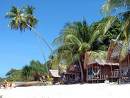
Picture this: Stepping foot into a stunning, natural painting -- sparkling, crystal clear water, the sea breeze and summer sun, white sands, scattered with coconut trees and exotic species of flora, rarely found on other beaches.The natural beauty and serenity of Pantai Sumur Tiga is sure to leave you in awe, and is almost enough to make the entire trip worthwhile.

Days on Pantai Sumur Tiga are best spent lying on the sands, or sitting in the grass under the palm trees, listening to the sounds of the wind through the trees, and the crashing of the turquoise sea against the sand.The peace and tranquillity found here will no doubt leave you feeling so happy and refreshed by the end of your trip, you’ll never want to leave. Have a chat with the local residents to hear the local legends of Pantai Sumur, or maybe simply about their favourite past times here. Take a swim, if it suits your fancy. With water so clear, it will be hard to keep out of it! For the snorkelers and divers, though coral is rumoured to be better on other beaches on Pulau Weh, the variety of fishes and other ocean-life will more than make up for it.

Somewhere near the fourth well, (Sumur Empat,) there is a historic bunker from the time of the Japanese Occupation. It was built through slave labor during World War II, and is unfortunately not very well maintained. If you travel along the road further south, past the fifth well (SumurLima,) you will come to another beach—a black sand beach. There is another, larger Japanese bunker here. This area is also a popular weekend hang-out place among the locals. 
In short, Pantai Sumur Tiga: Secluded and serene. White sand, crystal clear water, summer sun, exotic coral, rich ocean-life, friendly people, tropical resorts. What more could you want? Just don’t forget to bring your camera!

GET THERE :

Getting to Pantai Sumur Tiga is quite a journey, but one that will be worth it. The first step is to fly to Banda Aceh Airport, which is accessible domestically from Medan (North Sumatra,) and Jakarta (the country’s capital city,) and internationally from Kuala Lumpur and Penang, Malaysia.

After arrival in Banda Aceh, take a taxi to Ule Lhee, the port of Aceh. From there, you have a choice of a “fast boat” or a ferry to Sabang, the port on Pulau Weh. The fast boat takes approximately 40-60 minutes, while the ferry can take 1.5-2 hours. (Take note of the duration of the boat ride, if you need to catch a flight home on the same day!)

Boats depart from Aceh to Sabang twice a day, in the morning and the afternoon. Afternoon trips are recommended, as you will get to experience not only the sunset, but you will also have the chance at dolphin sightings as you approach PulauWeh. From the Sabang port at PulauWeh, take a taxi or if you’re feeling more adventurous, a becak (local rickshaw) to your final destination of Pantai Sumur Tiga.